
Roof Anchor Compliance in South Africa: What Contractors Must Know
Working at height remains one of the highest-risk activities on South African construction, industrial, and maintenance sites. Roof anchors play a critical role in protecting workers, but only when they are correctly designed, installed, tested, and maintained.
Roof anchor compliance is not just a best practice. It is a legal and operational requirement tied to SANS standards, audit readiness, and duty-of-care responsibilities.
This guide explains what contractors, safety officers, and facility managers need to know to remain compliant and confident.
What Are Roof Anchors and Why They Matter
Roof anchors are certified connection points designed to secure fall-arrest equipment such as harnesses and lifelines. They form the foundation of any compliant height safety system.
A compliant roof anchor must:
- Be structurally suitable for the roof or substrate
- Be correctly positioned to limit fall distance
- Withstand required load forces
- Be tested, certified, and documented
Without compliant anchors, even the best PPE and lifeline systems cannot function safely.
Key SANS Standards Governing Roof Anchors
In South Africa, roof anchor compliance is guided by several SANS standards that work together.
Core Standards Include:
- SANS 50795 – Anchor devices
- SANS 50361 – Personal fall arrest systems
- SANS 10160 – Structural loading requirements
These standards define how anchors must be designed, installed, tested, and verified under load conditions. Anchors must typically withstand forces exceeding 15 kN, equivalent to roughly 1.5 tonnes, depending on application.
Compliance is verified through physical testing and documented certification.
Installation Requirements and Best Practices
A compliant roof anchor installation begins long before drilling into a roof.
Best practice includes:
- Site-specific risk assessment
- Structural verification of the substrate
- Engineered anchor positioning
- Correct fixing methods and materials
- Integration with access routes and lifelines
Generic or off-the-shelf installations often fail audits because they ignore roof structure, loading paths, or real-world usage patterns.
Inspection, Testing and Ongoing Compliance
Even a perfectly installed anchor will not remain compliant forever.
Roof anchors must be:
- Inspected annually
- Re-tested after roof modifications, impacts, or falls
- Recertified with updated documentation
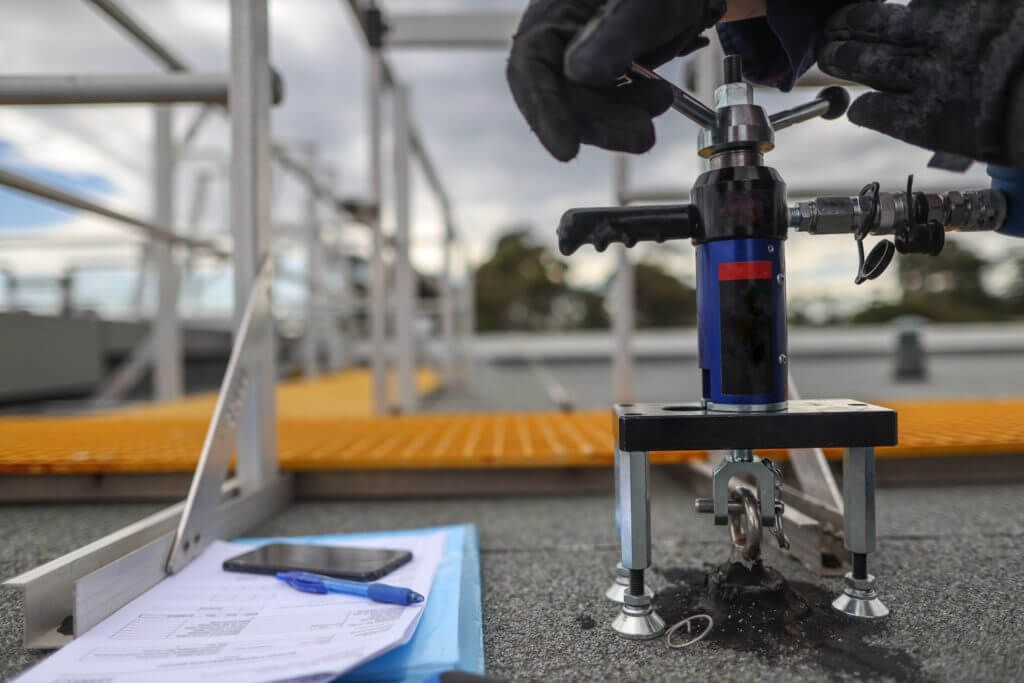
Pull testing verifies the anchor’s load capacity and structural integrity. Proper inspection records ensure your safety file is audit-ready at all times.
Common Compliance Mistakes to Avoid
Some of the most common failures include:
- Anchors installed without structural verification
- Missing or expired test certificates
- No maintenance or inspection schedule
- Anchors installed too far apart or incorrectly positioned
These issues often only surface during audits or incidents, when it is already too late.
Compliance Builds Confidence
Roof anchor compliance protects lives, reduces liability, and ensures uninterrupted operations.
By working with a certified specialist and maintaining proper documentation, contractors and facility managers can approach every audit with confidence.
Next step: Book a site inspection or compliance assessment to verify your existing anchors meet current SANS requirements.