

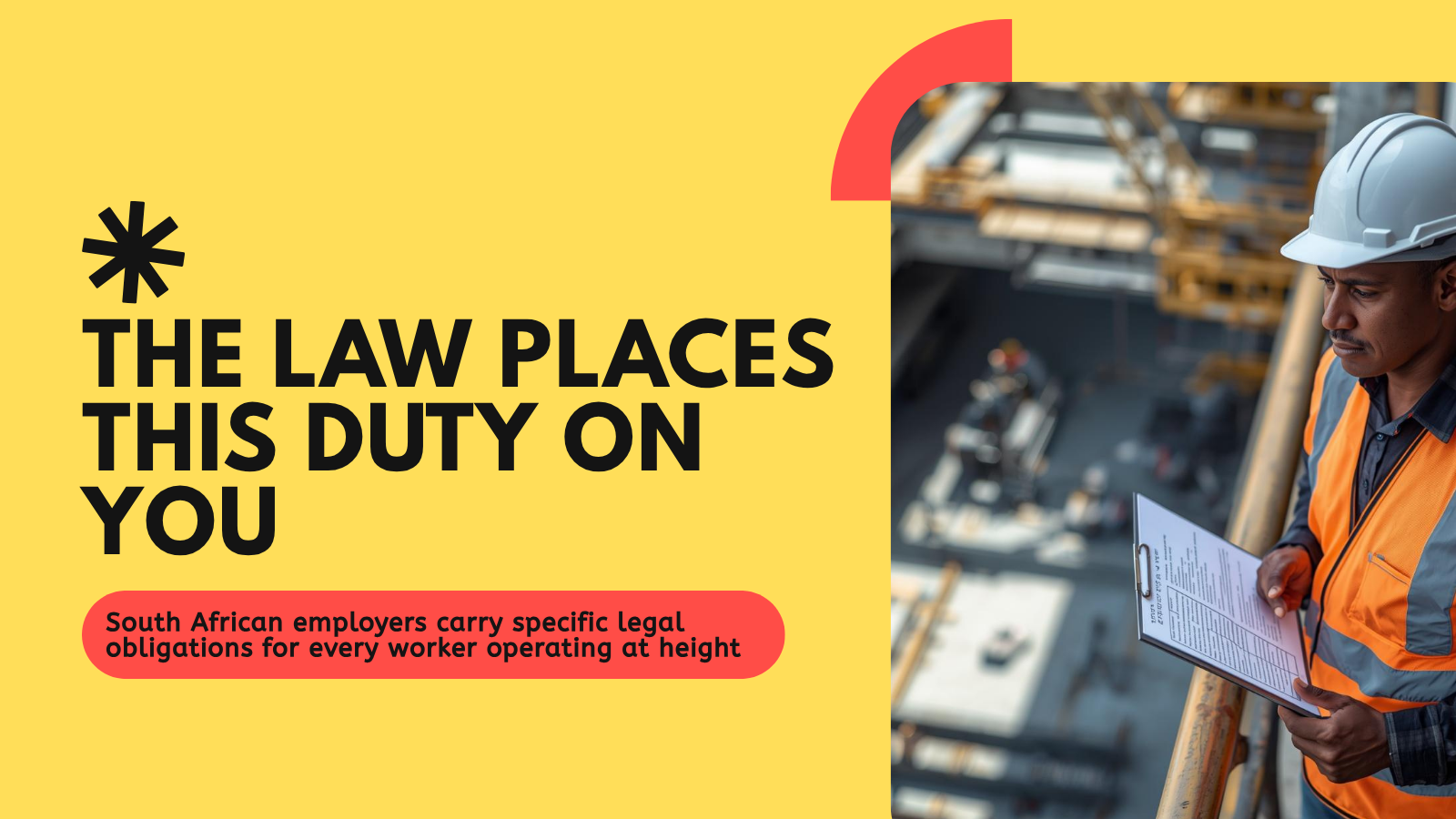
South African employers have specific legal duties for working at height under the OHSA and Construction Regulations 2014. Learn what is required and how to meet your obligations.
Learn the most common causes of workplace falls in South Africa and how SANS-compliant fall protection systems help employers reduce risk and meet their legal obligations.
South Africa's SANS regulations for working at height define legal obligations for every employer. Learn which standards apply to your site and how to comply.
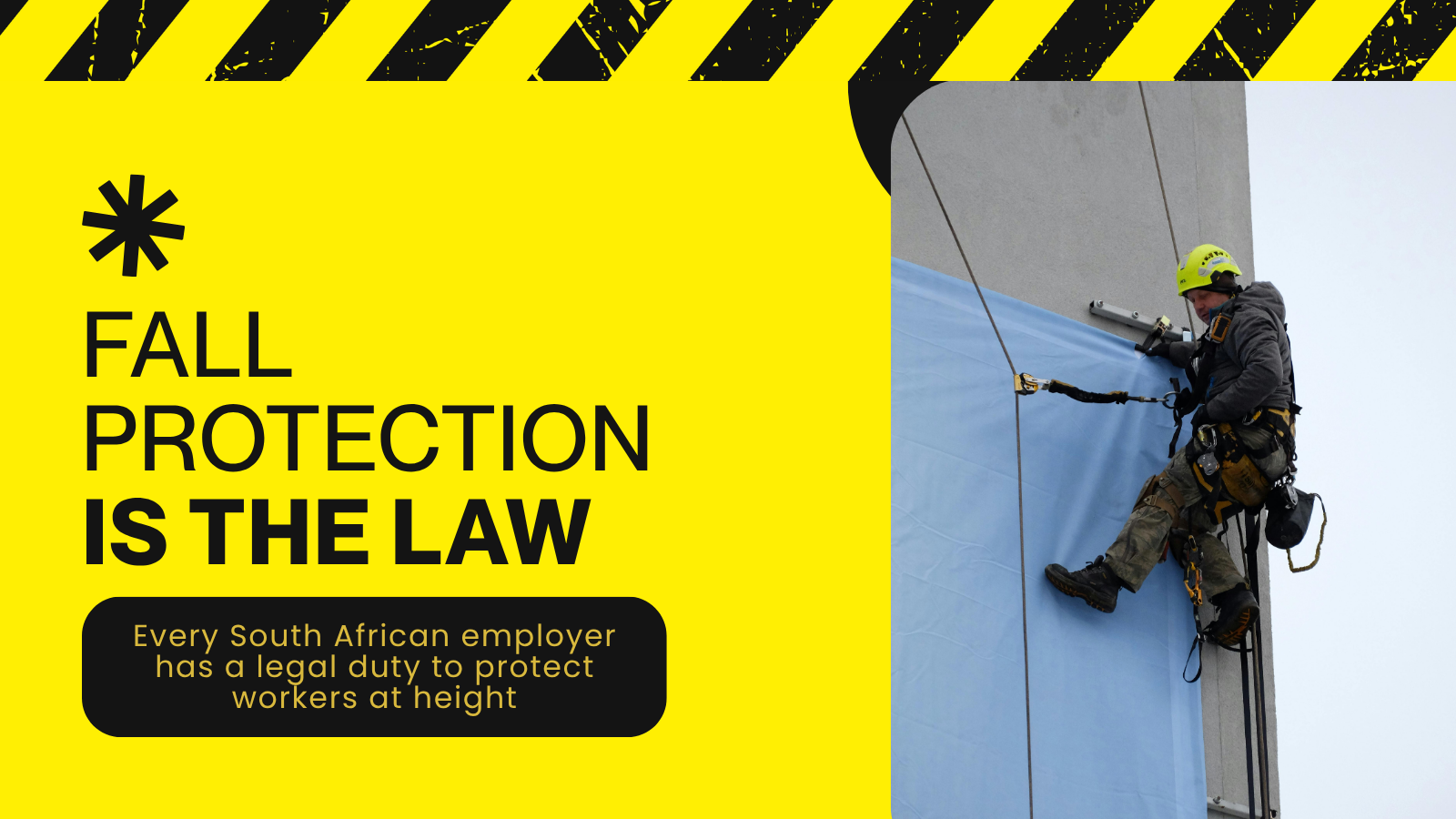
Fall protection in South Africa is a legal requirement. Learn what it means, what the law says, and what your facility needs to have in place to stay compliant.
Learn why SANS-certified fall protection solutions like roof anchors, lifelines and fixed ladders are essential for South African industrial and roofing projects in 2026.

Not all height safety systems are the same. Learn how to choose between anchors, lifelines, ladders, and guardrails for full SANS compliance.
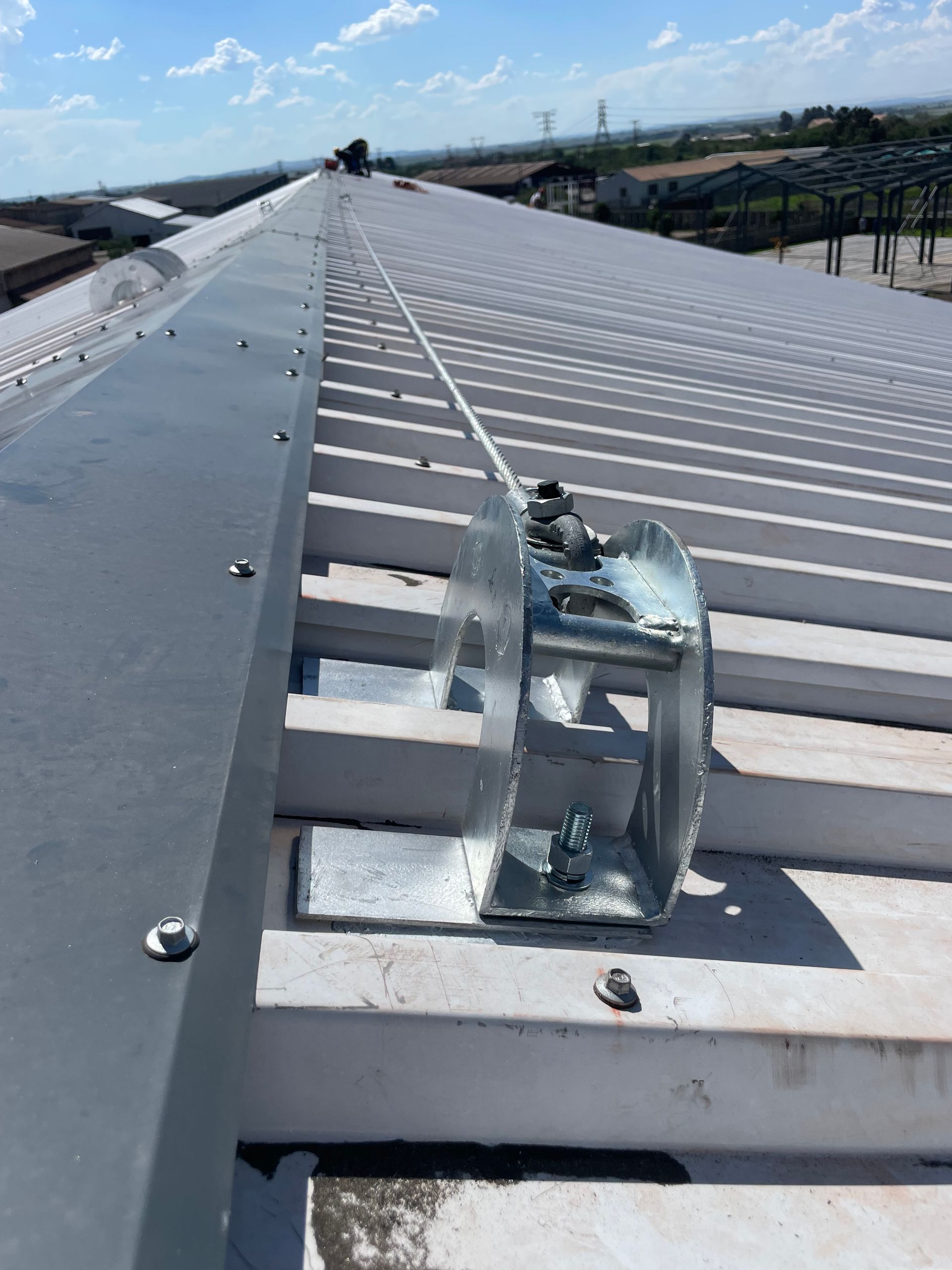
Understand roof anchor compliance in South Africa. Learn which SANS standards apply, how anchors are tested, and how to stay audit-ready on every site.