When Routine Becomes Risk
A maintenance team at a Johannesburg warehousing facility was sent to check the roof drainage system. The job was routine. The team accessed the roof using a fixed ladder that had not been formally inspected in over two years. One worker moved across the roof surface without fall protection. The area near the parapet was sloped and covered with algae. He slipped toward the edge and was stopped only by a nearby vent housing.
No injury occurred that day. The incident was not reported. The surface conditions were not corrected.
Three months later, a different worker was assigned to the same area. He fell from the roof.
Why Workplace Falls Carry Serious Consequences
Falls from height are among the leading causes of fatal workplace injuries in South Africa. The Department of Employment and Labour consistently lists falls among the top causes of occupational fatalities each year. What makes this data significant is that most falls are not random events. They have identifiable, preventable causes.
The legal exposure that follows a workplace fall is substantial. Under the Occupational Health and Safety Act (OHSA) 85 of 1993, employers can face criminal prosecution, civil liability claims, and enforcement action. A single preventable fall can result in a prohibition notice that stops all work on site.
The Most Common Causes of Falls at Height
Fall incidents at height in South African workplaces typically follow a pattern. Understanding that pattern makes prevention possible.
Surface conditions are a primary factor. Wet, dusty, or contaminated surfaces create slip hazards on rooftops, elevated walkways, and platforms. Algae, oil residue, and loose gravel are common on industrial rooftops. These hazards are often invisible from ground level.
Unsecured or absent edge protection is another major cause. Where guardrails, parapets, or edge barriers are missing or damaged, workers face an uncontrolled fall risk near every perimeter. This applies to rooftops, mezzanines, scaffolding, and elevated platforms.
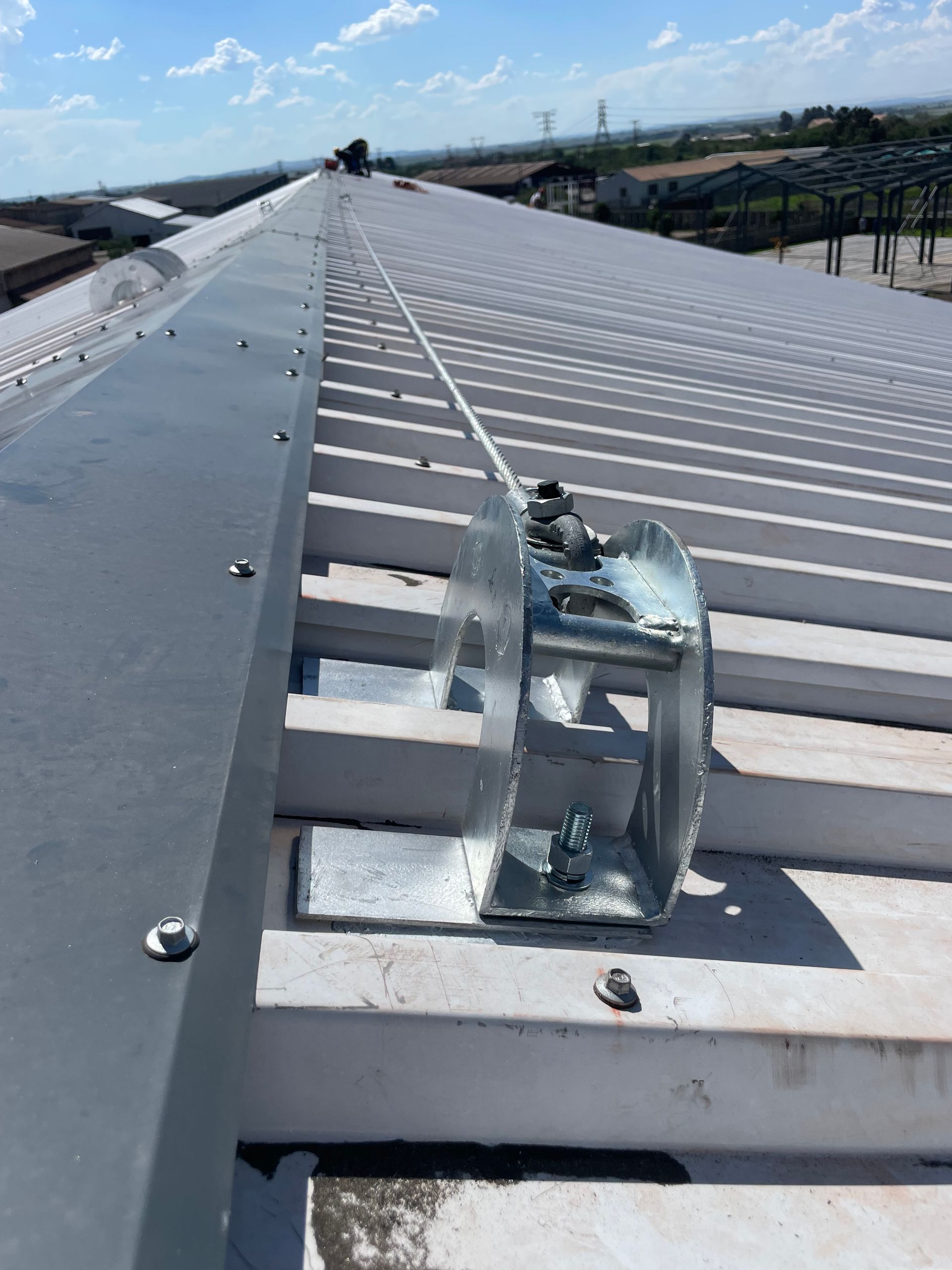
Equipment failures account for a smaller but significant proportion of falls. A fall arrest system that has not been inspected, a harness worn incorrectly, or an anchor point that has not been load-tested can fail at the exact moment protection is needed. The worker believes they are protected when they are not.
Poor access systems are a consistent contributor. Makeshift ladders, unsecured portable ladders, and ladders placed at incorrect angles create instability at the point of entry. Falls from ladders account for a significant share of height-related injuries in South Africa.
Inadequate planning and supervision sits beneath most incidents. When work at height is not formally assessed, when no written fall protection plan exists, and when workers have not been trained, every other risk is compounded.
What South African Law Requires
South African law requires employers to identify and control fall hazards before any work at height begins. This obligation is not discretionary.
The Construction Regulations 2014, made under the OHSA, require that employers and contractors prepare and implement a fall protection plan (FPP) before elevated work starts. The FPP must identify fall risks at each elevated work area, specify the controls to be used, and confirm that workers are trained and competent.
SANS 10085 governs the safe use of scaffolding. SANS 1808 sets requirements for safety harnesses and their components. SANS 10147 covers the correct selection, inspection, and use of portable ladders. Each piece of equipment used at height has specific requirements for selection, maintenance, and inspection under these standards.
Non-compliance does not require a fall to occur. A Department of Labour inspector can issue a compliance order, a fine, or a site prohibition notice based solely on missing documentation or equipment in poor condition. Learn more about the standards that apply to your site on EMFab's
standards and testing page.
How to Address the Most Common Fall Hazards
Begin with a site-specific hazard assessment. Walk every elevated area before work begins. Identify surfaces, edges, access points, and equipment that present fall risks. Review this assessment when conditions on site change.
Address surface conditions. Anti-slip coatings, improved drainage, and scheduled cleaning of rooftop surfaces reduce slip hazards. These are low-cost controls that remove one of the most common fall causes.
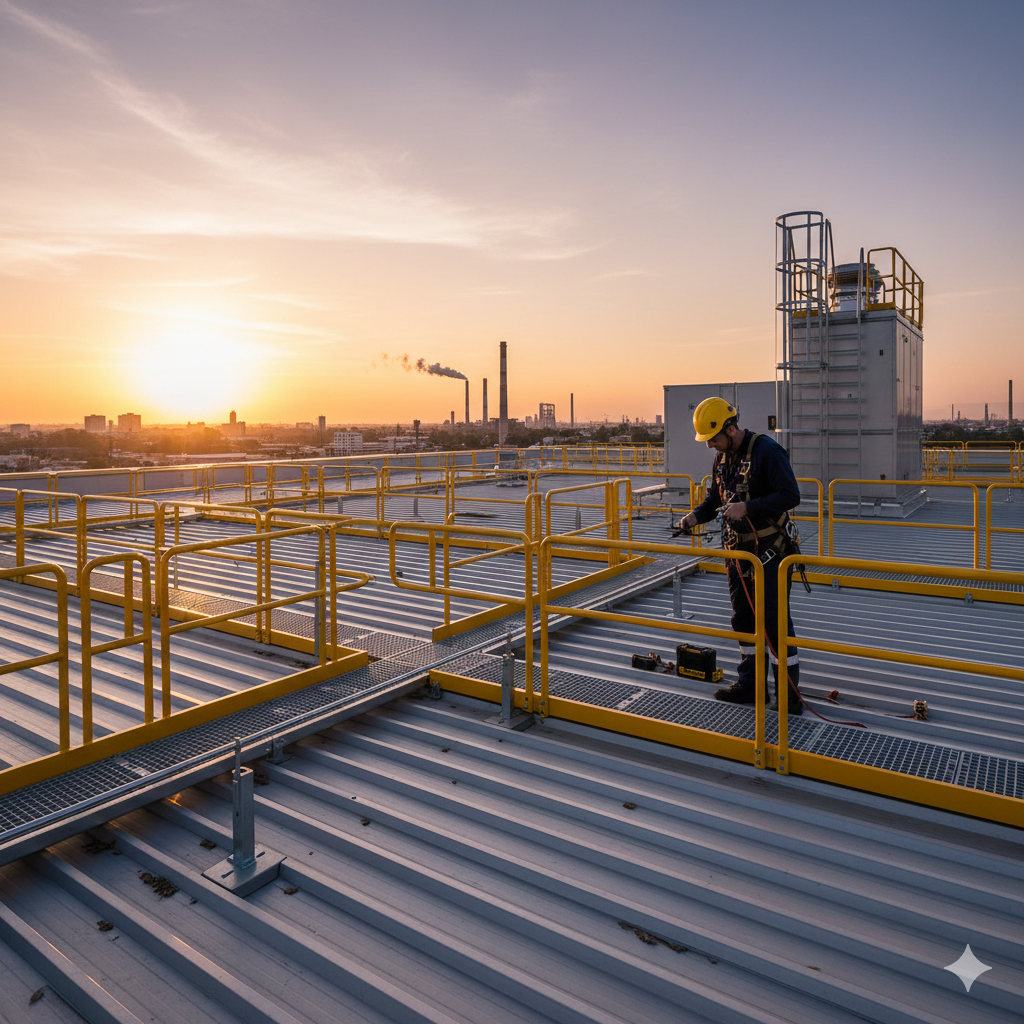
Install or repair edge protection. Guardrails and handrails must meet the minimum height requirements set in the applicable regulations. Where permanent edge protection cannot be installed, temporary systems must be in place. EMFab's
guardrails and walkways solutions include both permanent and temporary options for industrial and commercial applications.
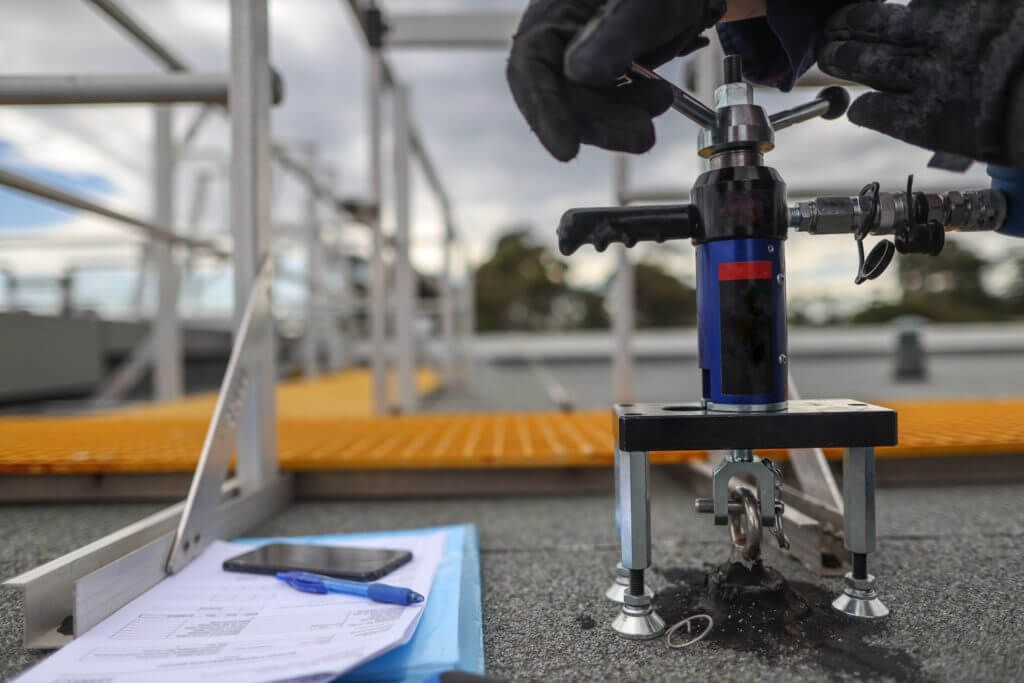
Inspect all fall protection equipment before each use. Harnesses, lanyards, and anchor points must be checked by a competent person. Any equipment showing wear, damage, or deformation must be removed from service immediately. EMFab's
inspection, testing and maintenance service provides scheduled compliance inspections for all fall protection equipment.
Verify access systems. Fixed ladders and elevated platforms must meet the requirements of SANS 10147 and the Construction Regulations. View EMFab's
fixed access ladder and platform solutions for compliant access options.
Keep training records. Every worker who accesses height must receive documented training on hazards, controls, equipment use, and emergency procedures.
Known Hazards Demand a Documented Response
Most workplace falls in South Africa occur in conditions that were visible and known before the incident happened. Surface hazards go unreported. Edge protection is absent or damaged. Equipment is overdue for inspection. Workers access height without a written plan in place.
The law places the duty of care on the employer. When a fall occurs and the hazard was known but uncorrected, the employer's legal and financial exposure is serious. That exposure does not reduce because a contractor signed a form or because the work was described as routine.
Identifying causes is only the first step. The response matters: assess, fix, document, and verify that controls are working.
Take the Next Step
If your facility requires a compliance assessment or fall protection inspection,
contact EMFab for a professional evaluation.