
What Is Fall Protection and Why It Matters

EMFab • March 30, 2026

Share this article

Real-World Scenario

A contractor arrives at an industrial site in Gauteng to check the rooftop air conditioning units. It is a job he has done before. The access ladder is in place. The job should take about two hours.


There is no Fall Protection Plan on file. No anchor points have been fitted to the roof. No one has been put in charge of overseeing the work.


About forty minutes in, he steps onto a section of roof sheeting near the edge. The sheet moves. He loses his balance and falls four metres to the concrete below.


This is not a rare story. It happens on South African sites every year, across many different industries. The job was not unusually dangerous. What made it dangerous was the absence of a system to manage the risk.

The Risk

Falls from height are one of the leading causes of serious injuries and deaths at work in South Africa. This is not just a construction problem. It affects any business where workers go up: factories, warehouses, telecom towers, energy sites, commercial buildings, and maintenance teams of all kinds.


The physical harm is obvious. What is often overlooked is the legal harm to the employer.


When someone falls at work, the Department of Employment and Labour investigates. They look at what the employer had in place before the fall happened: Was there a Fall Protection Plan? Were the anchor points certified? Had the worker been trained?


If the answer to those questions is no, the employer faces serious consequences. These can include criminal charges under the Occupational Health and Safety Act (OHSA), civil claims, and having the site shut down while the investigation runs.


Here is the part many employers miss: you do not need to wait for a fall to be in trouble. A Labour inspector can visit your site at any time. If your fall protection is not in order, they can stop your operations on the spot.

Technical Explanation

Fall protection covers all the systems, equipment, plans, and procedures used to stop workers from falling, or to reduce the harm if a fall does happen.


There are three main types, and they work in different ways.


Fall Prevention stops the worker from ever reaching the danger zone. Things like guardrails, barriers at roof edges, and covers over openings are fall prevention. They work without the worker needing to do anything. EMFab's guardrails, walkways, and inverter cage systems are built and fitted for exactly this purpose on industrial and commercial structures across South Africa.


Fall Restraint keeps the worker tied to a safe point using a short lanyard. The lanyard is cut to a length that stops the worker from getting close enough to the edge to fall off. A fall cannot happen because the worker cannot reach the hazard.


Fall Arrest kicks in if a fall does start. It cannot stop a fall from beginning, but it stops the worker from hitting the ground. It uses a harness worn on the body, a shock-absorbing lanyard or self-retracting lifeline, and a strong anchor point. EMFab's roof anchor systems are load-tested to above 15 kN, which gives you the solid starting point a compliant fall arrest system needs.


Each type suits different situations. The right choice depends on the height, the job, the structure, and how often people need access. Using the wrong type, or mixing equipment that is not compatible, creates a weak point that may not be obvious until something goes wrong..

Compliance Layer (SANS)

The main law that covers height safety in South Africa is the Occupational Health and Safety Act 85 of 1993 (OHSA). It is supported by the Construction Regulations (2014) and the General Safety Regulations.


The OHSA applies to far more than construction sites. If your workers access an elevated surface at any point during their work, the law applies to you.


All fall protection equipment used in South Africa must meet the relevant SANS (South African National Standard) specifications. These cover harnesses, anchor points, lanyards, and lifeline systems. EMFab's standards and testing pageexplains exactly how these standards are applied and tested on every system they install.


Under the law, employers must:


  • Write a Fall Protection Plan that is specific to the site and the tasks being done, before any work at height begins
  • Appoint a competent person to oversee all work done at height
  • Make sure workers are trained, given the right equipment, and properly supervised
  • Have all fall protection systems checked and certified on a regular basis, and keep those records


A Fall Protection Plan is not a form you fill in once and file away. It must reflect what is actually happening on your site. When things change, the plan must be updated.


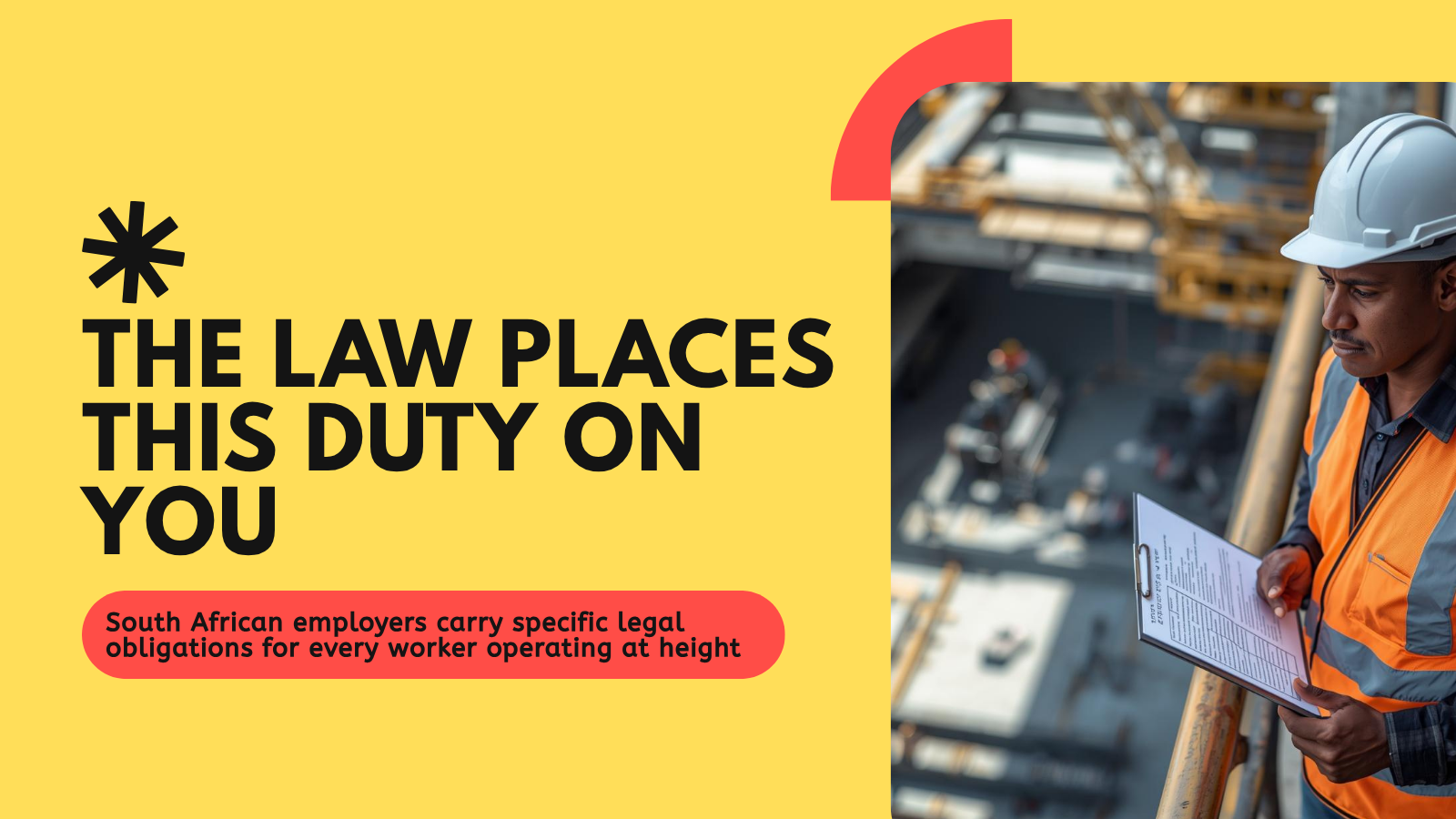
The employer who controls the site carries the main responsibility. Contractors who work on that site also share some of that responsibility, but the primary duty sits with the person in charge of the workplace.

Practical Implementation

Setting up fall protection properly starts before anyone goes up. Here is a straightforward process to follow.


Step 1: Map the hazards Walk the site and find every place where a worker could fall. Include regular access points and occasional ones. Look at rooftops, mezzanine levels, elevated walkways, and any opening in a floor or roof.


Step 2: Assess the risk For each area, consider the height, what the surface is like, how often people need access, what the job involves, and how close they get to unprotected edges. This tells you what type of protection is needed.


Step 3: Install the right systems Match the system to the risk. Permanent systems like anchor points and horizontal and vertical lifelines must be designed and fitted by qualified people, then tested and certified before use.


Step 4: Write it down Put together a Fall Protection Plan. Keep copies of all equipment certificates, inspection results, and training records. If there is ever an inspection or incident, this paperwork is your evidence that you did things correctly.


Step 5: Train your workers Everyone who uses the system needs to know how to use it. Training must cover how to put on a harness properly, how to connect to an anchor, how to check equipment before use, and what to do in an emergency.


Step 6: Inspect regularly Systems must be checked by a qualified person at least once a year. If any equipment has been involved in a fall or has been damaged, take it out of use immediately.

EMFab's inspection, testing, and maintenance service covers annual inspections, post-incident checks, and full recertification with paperwork that is ready for any audit.

Risk-Based Conclusion

The law on height safety in South Africa is clear. It applies to every employer whose workers go up, in any sector, on any type of structure.


An employer with a proper plan, certified equipment, trained staff, and up-to-date inspection records has both the physical risk and the legal risk under control. An employer without those things has full liability for anything that goes wrong, and nothing to show an investigator or a court.


Getting this right is not about spending a lot of money. It is about doing the work in the right order: assess the risk, install the right system, train your people, and keep your records current.


When you can show that process was followed, you are protected. When you cannot, you are not.


To see the full range of height safety solutions available for your facility, visit EMFab's products and solutions page.


If your facility requires a compliance assessment or fall protection inspection, contact EMFab for a professional evaluation.

Recent Posts

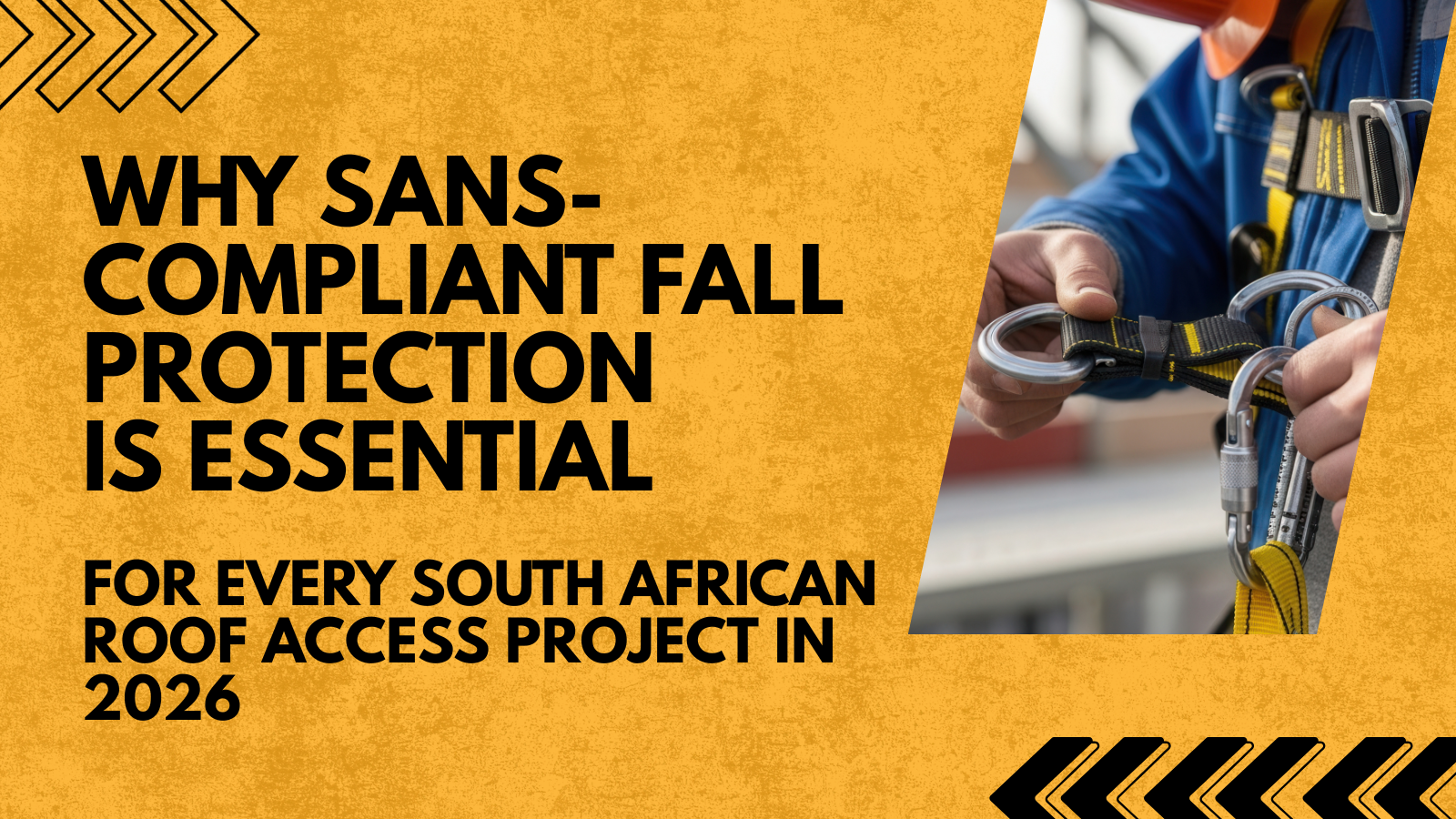
Poster promoting SANS-compliant fall protection for South African roof access projects in 2026. Includes a person's hands and safety gear.
By EMFab February 16, 2026
Learn why SANS-certified fall protection solutions like roof anchors, lifelines and fixed ladders are essential for South African industrial and roofing projects in 2026.
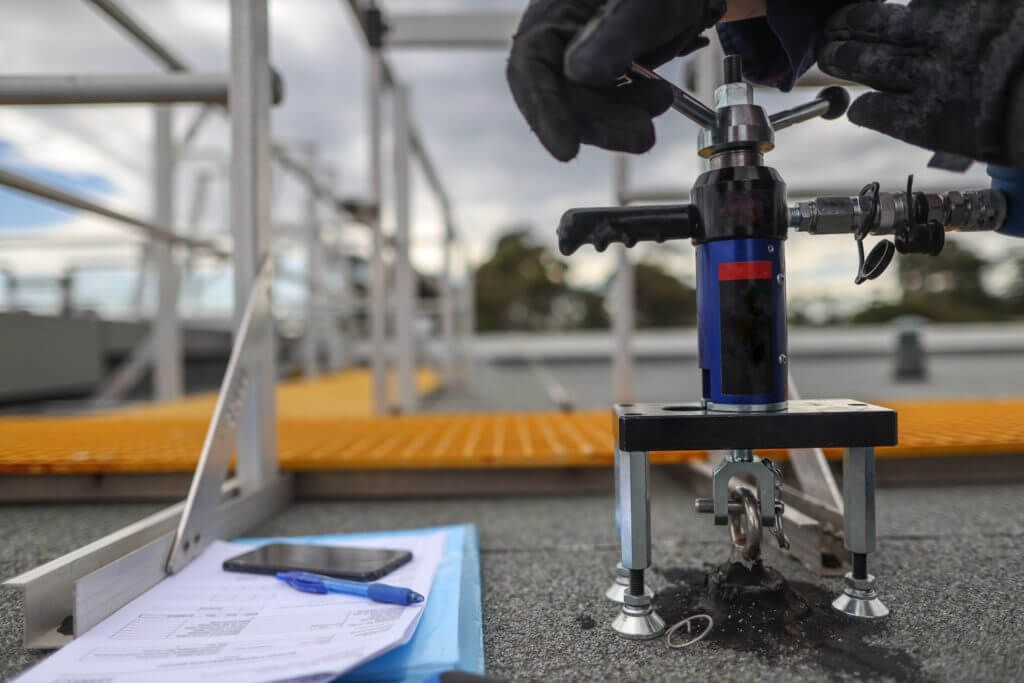
Gloved hands operate a testing device on a rooftop. A clipboard and scaffold are in the background.
By EMFab January 23, 2026
Regular inspection and testing keep fall protection systems compliant and safe. Learn inspection schedules, pull testing, and documentation requirements.
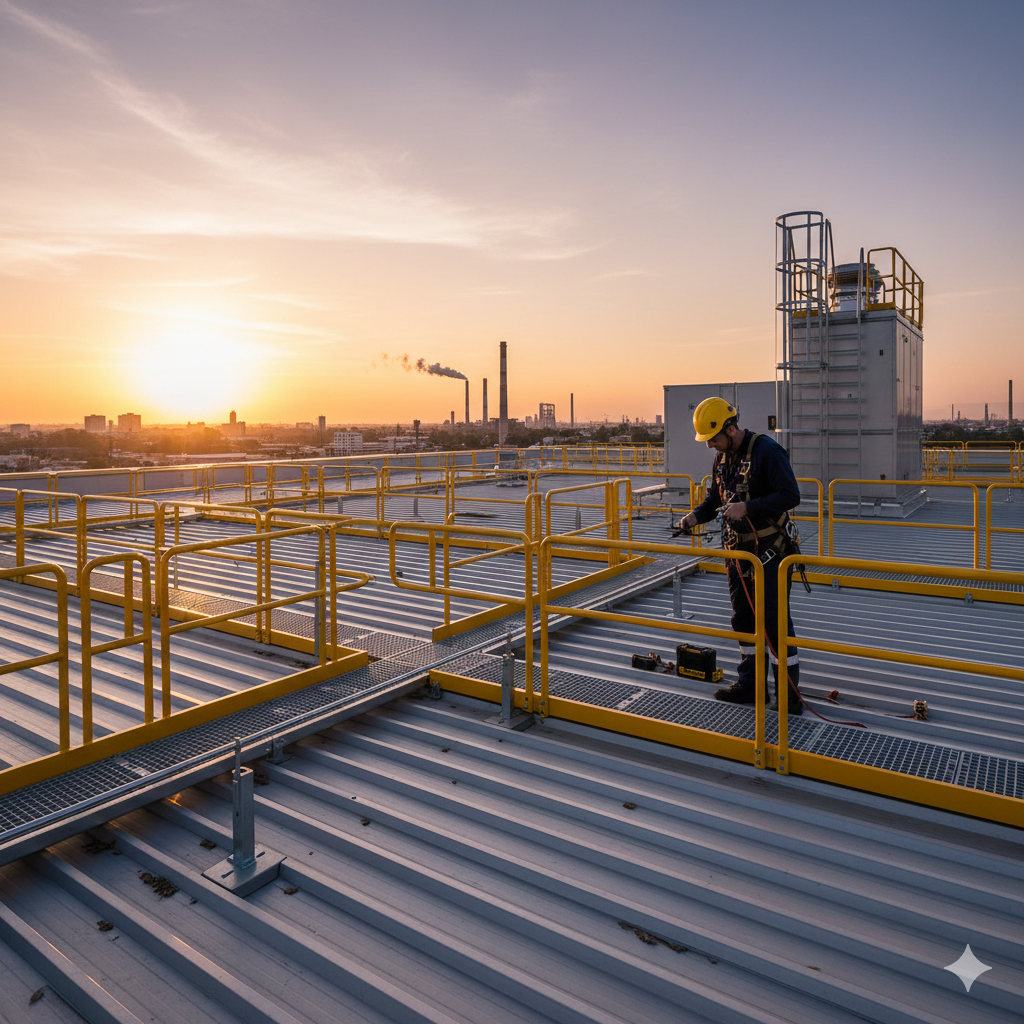
Rooftop worker with safety gear by yellow railing, at sunset. Industrial setting with chimneys.
By EMFab January 23, 2026
Not all height safety systems are the same. Learn how to choose between anchors, lifelines, ladders, and guardrails for full SANS compliance.
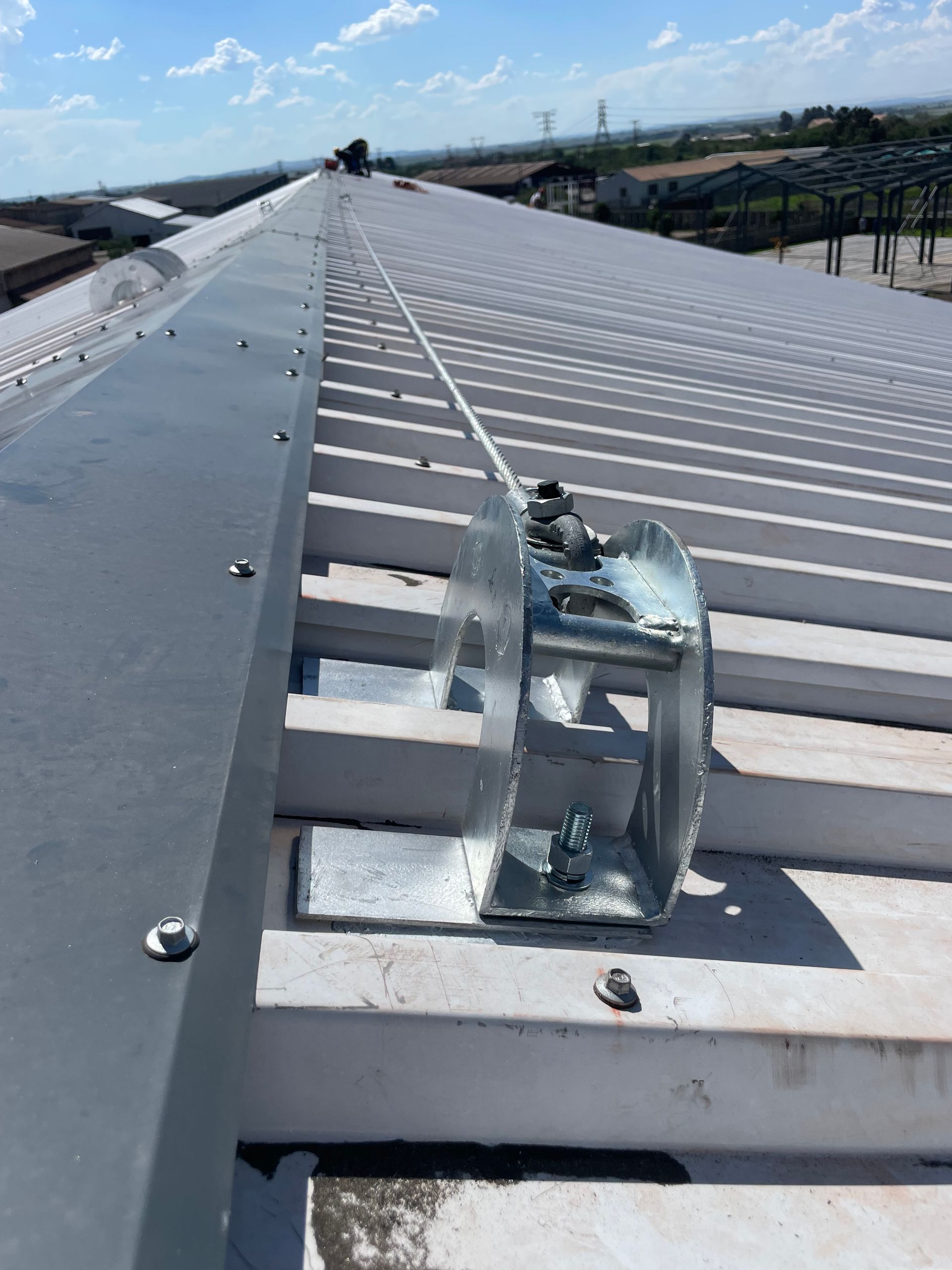
Emfab Roof Anchor
By EMFab January 23, 2026
Understand roof anchor compliance in South Africa. Learn which SANS standards apply, how anchors are tested, and how to stay audit-ready on every site.