When the Contract Does Not Cover Your Liability
A building owner in Durban engaged a contractor to repair roof sheeting. A contract was signed. The owner assumed that responsibility for safety passed entirely to the contractor once the agreement was in place.
No fall protection plan was prepared before work began. The contractor arrived with workers, no written risk assessment, and no fall protection equipment. A worker fell from the roof and sustained serious injuries.
When investigators from the Department of Employment and Labour arrived on site, both the building owner and the contractor were found to have failed their legal obligations. The contractor had no fall protection plan. The building owner had not checked the contractor's compliance capability before allowing access. Both parties faced enforcement action.
The Legal Exposure Employers Cannot Transfer
South African law does not allow an employer or building owner to transfer all safety responsibility to a contractor through a commercial agreement. The OHSA 85 of 1993 places specific duties on every employer and on every person who controls a workplace where work at height is performed.
Ignorance of these duties is not a legal defence. When a worker is injured in a fall, investigators look at the chain of responsibility from the worker up. That chain can reach the employer, the contractor, the principal contractor, and the person who controls the site and granted access.
Understanding the Chain of Legal Responsibility
The OHSA defines duties across several categories of responsible parties.
The employer has a primary duty to provide and maintain a safe working environment. Where work at height is involved, this means providing appropriate fall protection equipment, ensuring workers are trained, and establishing written procedures before work begins.
The user (also called the client or building owner in construction contexts) has obligations under the Construction Regulations 2014. Any person who commissions construction or maintenance work on a structure must appoint a competent contractor. That contractor must provide evidence of a valid fall protection plan before work begins on site.
The fall protection plan (FPP) is a written, site-specific document. It must identify every elevated work area, assess the risks at each location, specify the controls to be used, and confirm that workers are trained and competent. A generic template does not constitute a compliant FPP. The plan must reflect the actual conditions and hazards of the specific site.
The Construction Regulations also require that the FPP be prepared by a competent person. Competence in this context means documented knowledge, training, and experience in fall protection. Writing a document without the technical knowledge to support it does not satisfy this requirement.
What the Construction Regulations Require from You
The Construction Regulations 2014, issued under the OHSA, are the primary legal instrument for work at height in South Africa.
Regulation 8 covers fall protection specifically. It requires employers and contractors to prepare and implement a fall protection plan before elevated work begins. The plan must be reviewed and updated when site conditions change. It must be available on site at all times.
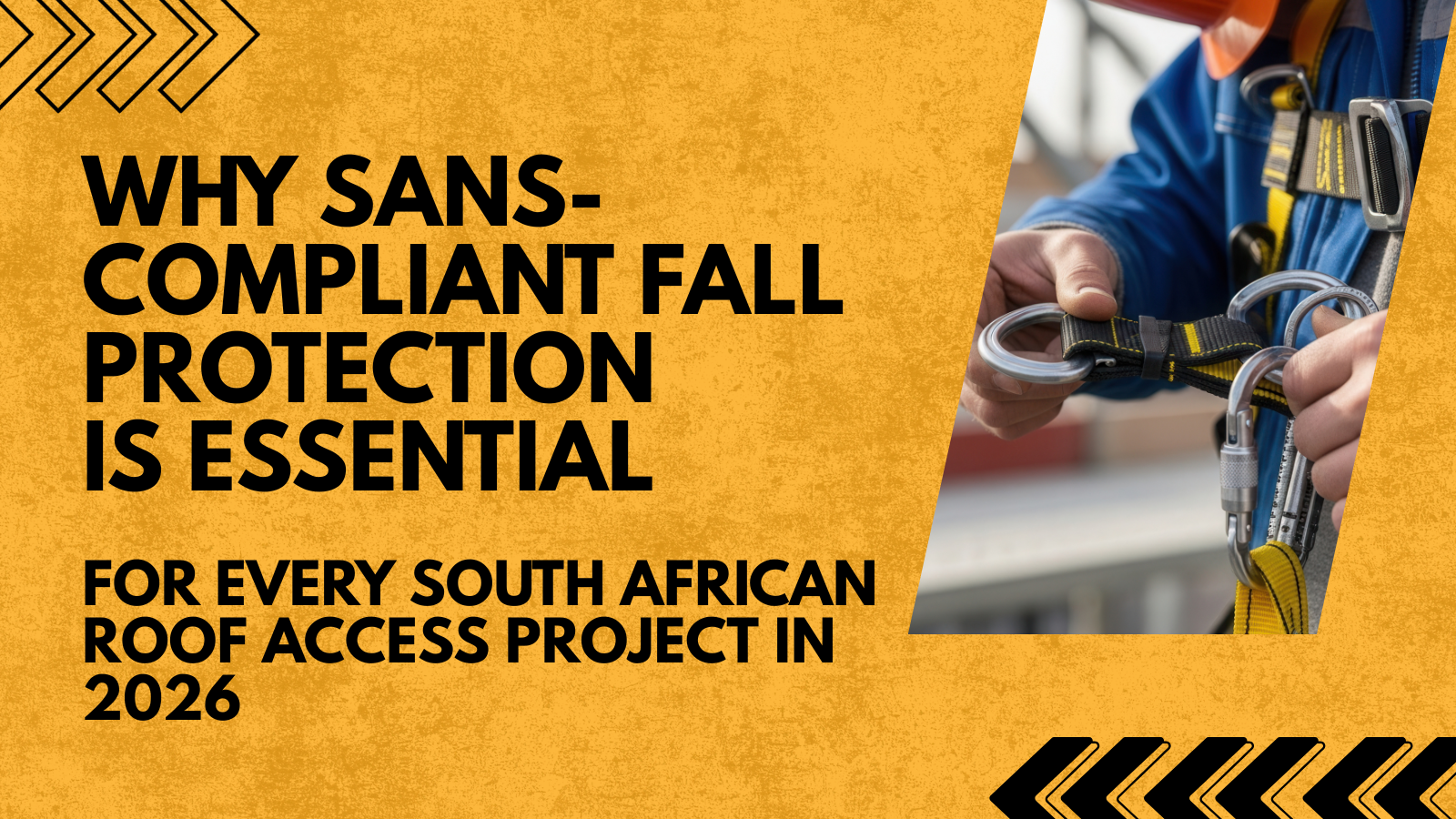
SANS 1808 sets technical requirements for safety harnesses and connecting components. SANS 50795 covers anchor devices used for personal fall protection. SANS 10147 governs the correct use and inspection of portable ladders. Each type of equipment used at height has a corresponding SANS standard that specifies how it must be selected, installed, used, and maintained.
The Department of Employment and Labour has authority to inspect any workplace and issue enforcement notices for non-compliance. A prohibition notice stops all work on site immediately and remains in force until compliance can be demonstrated. Visit EMFab's standards and testing page for a summary of the applicable standards.
Building a Compliant Height Safety Process
Start by confirming who holds legal responsibility for each elevated work area on your site. If multiple employers or contractors are present, document the responsibility chain clearly. Do not assume another party is covering an obligation that may also apply to you.
Before any contractor begins work at height on your premises, request their written fall protection plan. Review it for completeness. Check that it covers the specific work areas and tasks involved. A document that does not match the actual site conditions is not a compliant FPP.
Appoint a competent person for fall protection on your site. This person must be able to demonstrate formal training and documented knowledge of the relevant regulations and SANS standards. Appointment must be confirmed in writing.
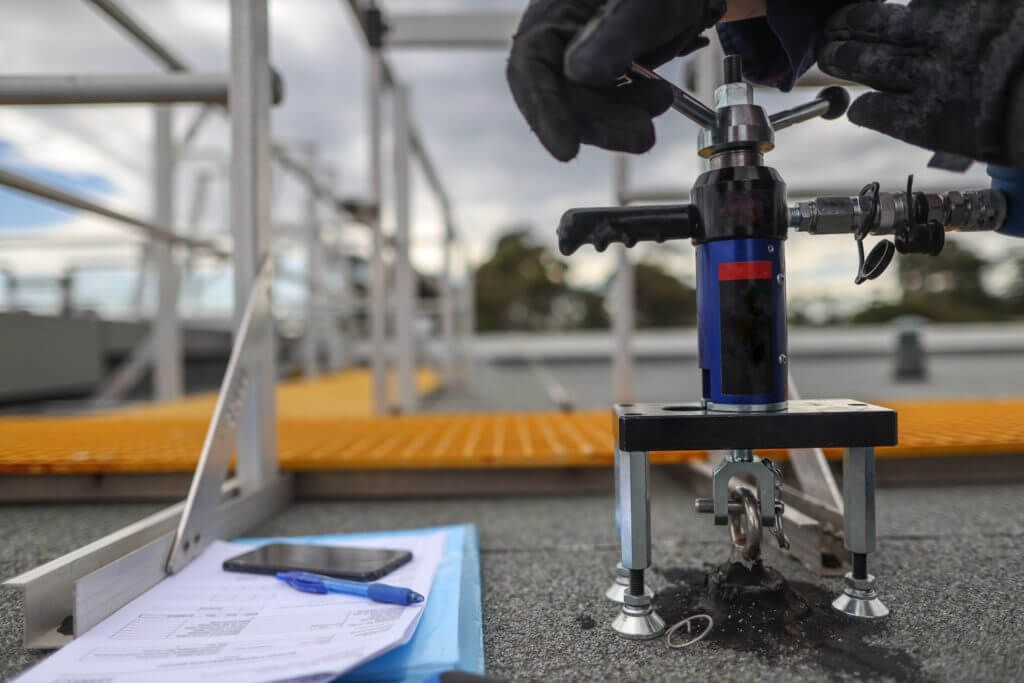
Maintain complete records. Every training session, equipment inspection, fall protection plan, and corrective action must be documented and kept on file. Records must be available for inspection at any time. EMFab's inspection, testing and maintenance service provides formal inspection records for all fall protection equipment assessed by our team.
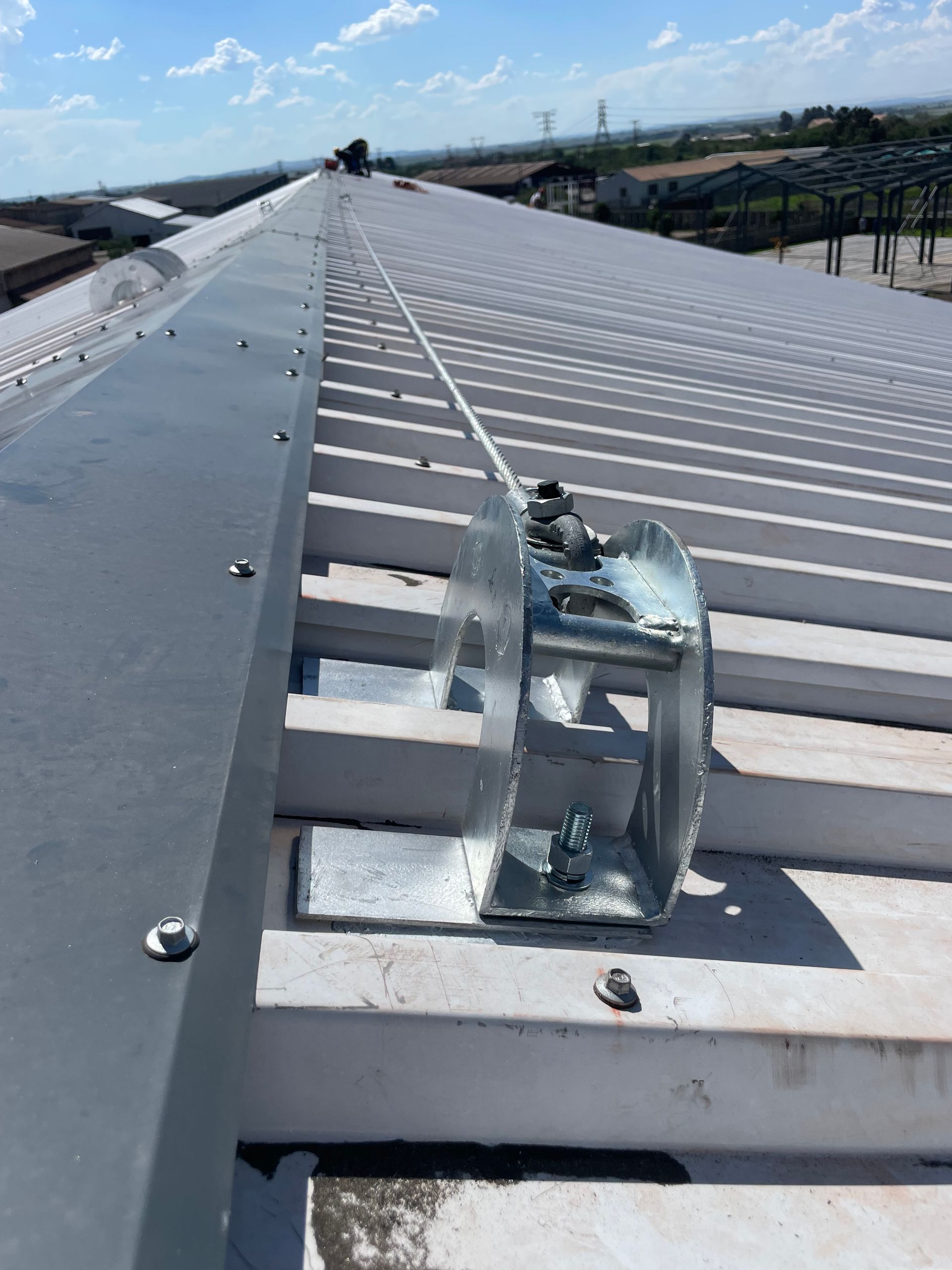
Review all fall protection equipment on a regular schedule. Harnesses, lanyards, and anchor systems must be inspected by a competent person. Equipment that has been used in a fall, shows visible damage, or is past its service life must be removed from service immediately. Visit EMFab's products and solutions page for compliant equipment options.
Responsibility Does Not End at the Contract
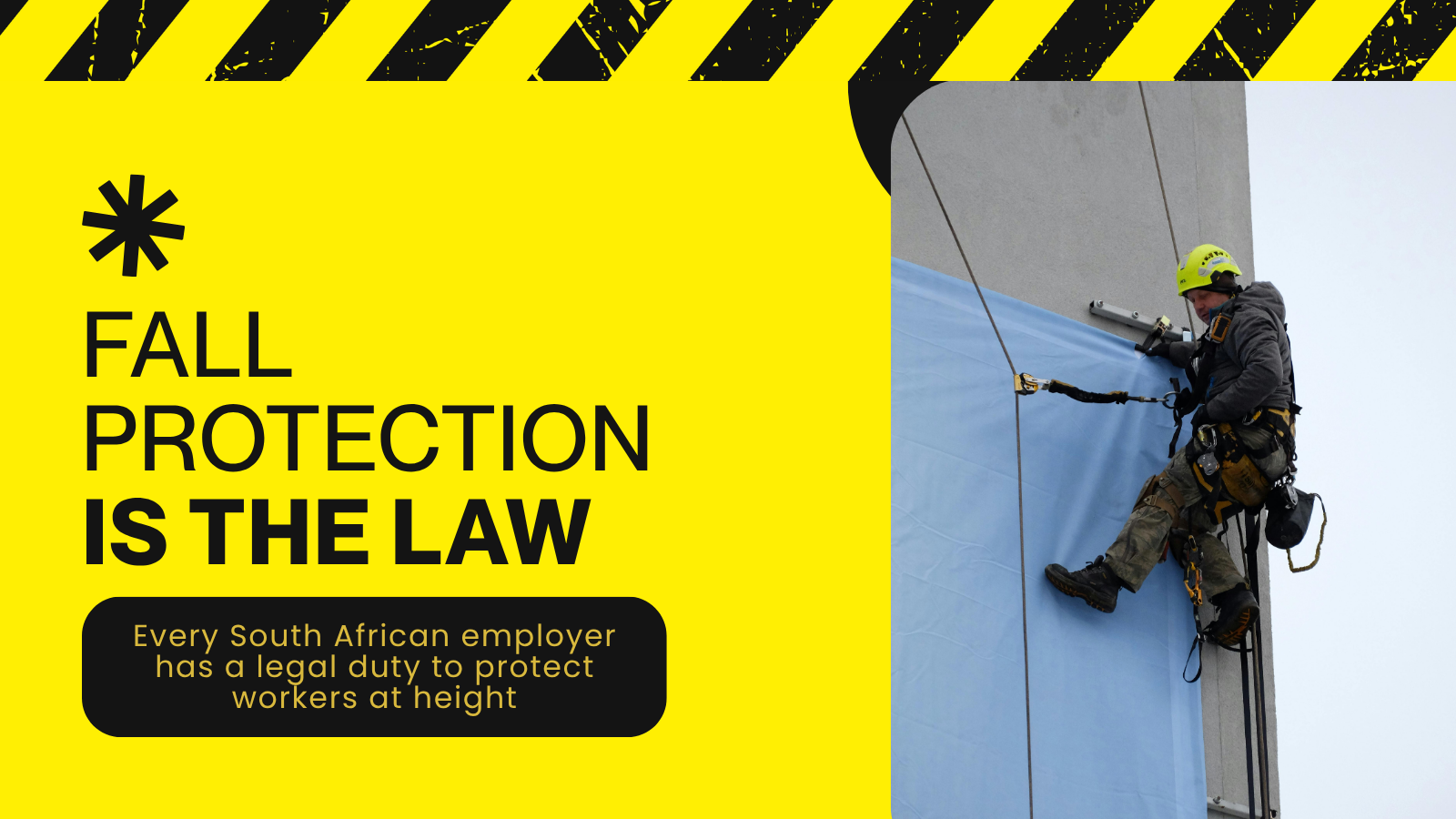
South African law is clear. Employers and site controllers have specific, non-transferable obligations when workers operate at height. A signed contract with a contractor does not remove the duty of the person who controls the workplace. A form signed by a worker does not transfer the employer's legal responsibility.
The cost of preparing a compliant fall protection plan, appointing a competent person, and maintaining equipment on a regular inspection schedule is a fraction of the cost of a workplace fall. That cost includes medical liability, legal fees, regulatory fines, lost productivity, and reputational damage following a serious incident.
The legal framework is in place. The duty to comply sits with the employer, the contractor, and the person who controls the site. Each party in that chain carries responsibility.
Take the Next Step
If your facility requires a compliance assessment or fall protection inspection,
contact EMFab for a professional evaluation.